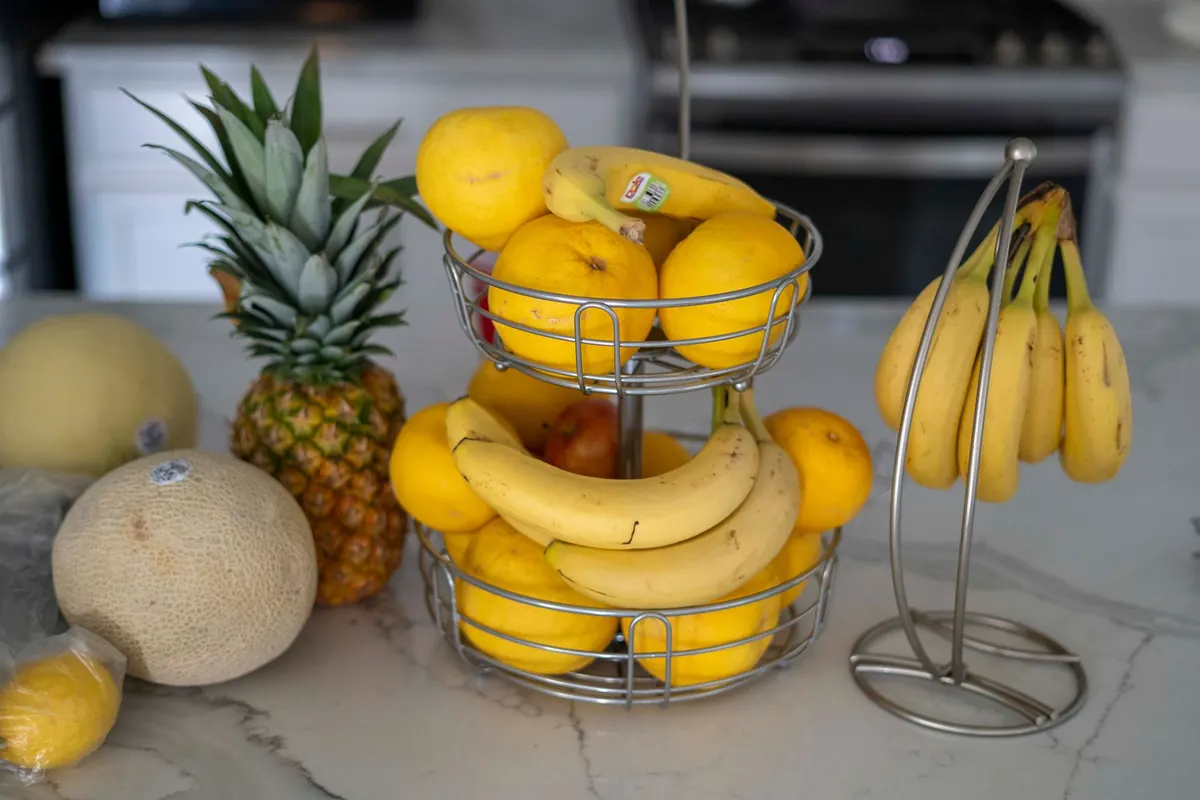
A bowl of fruit is never standing still. On Monday a pear is hard enough to knock on; by Thursday it smells sweet and gives slightly at the neck; by Saturday it is a different thing altogether. Most of the fruit wasted in a UK kitchen is not bought and forgotten — it is bought, watched and missed. The gap between "not ready" and "past it" is often only a day or two, and it rarely announces itself.
The answer is not a gadget or a strict system. It is a short weekly rhythm: check, rotate, use, reset. Twenty minutes spread across seven days will keep a modest kitchen bowl under control, whether you do one big shop or pick things up as you go.
Why a weekly rhythm beats guesswork
Ripening is a process with stages, and each fruit moves through them at its own speed. Warmth hurries it along; cold slows it down. Some fruits — bananas, apples, pears, ripe avocados, peaches — release ethylene gas as they ripen, which speeds up whatever sits beside them. Others, such as berries, grapes and citrus, are far less affected and mostly just want to be kept dry and cool.
Once you know those two things, most decisions become obvious. The rest is simply looking, touching and smelling often enough to catch the good days.
Day one: the Monday audit
Start the week by emptying the fruit bowl onto the worktop in a single layer. Stacking bruises fruit, and bruised patches ripen faster and then rot faster than the rest of the fruit.
- Pick up each piece. Is it firm, giving slightly, or soft all over?
- Smell it near the stalk end. A ripe peach or melon smells sweet; an unripe one smells of very little.
- Sort into three piles: eat today, still ripening, hold for later.
- Remove anything mouldy, leaking or fizzy-smelling. With soft fruit, do not trim off the mouldy part and keep the rest — mould spreads invisibly through soft flesh. Bin it or put it in the food waste.
- Wipe out the bowl with a damp cloth and dry it before refilling.
Days two and three: rotate and separate
Rotate the bowl each morning. Move what is ripening towards the front where you will see it, and shift anything ripe into the fridge if you are not eating it that day. Cold does not stop ripening, it just slows it down, which buys you time.
If something is stubbornly hard, put it in a paper bag with a ripe banana for a day. The bag traps the ethylene and the fruit will soften noticeably. Do not use a sealed plastic bag — you will come back to a sweaty, mouldy mess.
If you want to slow everything down, separate the big ethylene producers from the rest. A ripe banana next to a punnet of raspberries is a countdown. The same goes in the fridge: keep apples and pears away from the salad drawer, potatoes and carrots, which can turn bitter or sprout sooner when exposed to ethylene.
- Keep on the worktop, out of direct sun: bananas, tomatoes, avocados, pears, peaches, nectarines, plums, mangoes, kiwi, whole melons.
- Keep in the fridge: berries, cherries, grapes, figs, apples, citrus, cut fruit in a covered container, and ripe fruit you want to hold for a day or two.
- Keep separate from everything else: ripe bananas and apples, if you would rather not hurry the rest along.
Days four and five: the peak window
Most fruit is at its best for roughly a day or two. A pear is ready when the neck just below the stalk gives to gentle pressure — the flesh near the core ripens first, so a pear that feels firm all over is usually not ready. An avocado is ready when the little stem cap lifts easily and you can feel a slight give under your thumb. A melon is close when the blossom end yields and it smells sweet.
The distance between unripe and spoiled is often two days. Plan for the middle of it.
On these days, cook or freeze deliberately rather than waiting for a wave of ripe fruit at the weekend. Berries freeze well spread on a tray first, then bagged once firm. Stone fruit is good sliced with the skin on. Bananas freeze peeled and broken into chunks. A purée of soft peaches or mangoes frozen in an ice cube tray gives you single portions for smoothies later.
Day six: rescue what is past its best
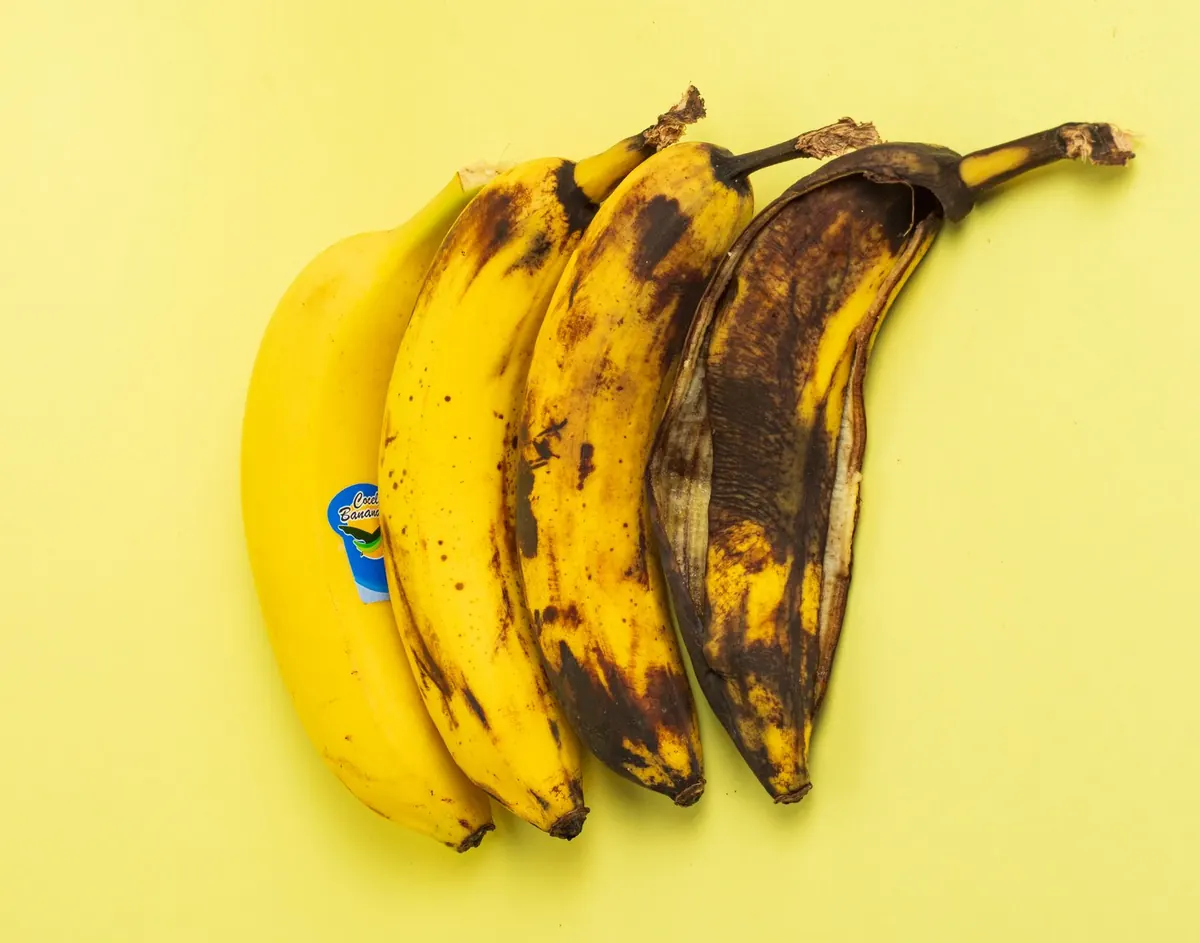
Overripe is not the same as spoiled. Overripe fruit smells sweet, perhaps faintly boozy, and looks tired but clean. Spoiled fruit has mould, a sharp or fizzy smell, leaking juice or an off taste. The first is worth cooking; the second is not worth the risk, so bin it.
Good uses for the overripe pile: banana bread, apple or plum crumble, quick compote simmered with a little sugar and lemon, tomato sauce for pasta, or a vinaigrette whizzed with oil and vinegar. Roasting tired stone fruit with a spoonful of honey and serving it with yogurt is a five-minute job that rescues a whole bowl.
Day seven: reset and plan the next shop
Wash the fruit bowl and dry it properly, then wipe the fridge drawer. Before you write a list, note what you threw away this week. If it is always the same thing — berries, say, or avocados — that is useful information. Buy fewer, buy some of them hard and some ready, or buy them for a specific meal rather than for the bowl.
When shopping, aim for a mix: a few pieces ready now, a few that need three or four days. Loose fruit lets you choose individual ripeness, and it is worth checking the base of a punnet for dampness before it goes in the trolley.
Keeping the routine going
The routine does not need to be perfect. Even the basic version — a daily glance and a nudge to move one thing forward — makes a measurable difference to what ends up in the bin. If you only manage one proper session a week, make it the Monday audit, because that is where the sorting happens and where next week's waste is prevented.
Two habits matter most: keep fruit in a single layer so you can see it, and act on the day something is ready rather than the day after. Everything else is detail. If you are ever unsure whether a piece of fruit is safe to eat, particularly soft fruit with any sign of mould, throw it out — no recipe is worth an upset stomach.
Photo: George Njukeng / Pexels